
Whiplash Treatment in Minneapolis
Whiplash treatment in Minneapolis from Dr. Jonathan Olson: a careful neck exam, drug-free chiropractic care, rehab and clear records for your no-fault claim.
Chiropractic care for whiplash
Get to the root of your whiplash
Also known as: Whiplash-Associated Disorder, Neck Sprain, Auto-Injury Neck Pain
Looking for whiplash treatment in Minneapolis? At our Lyndale Ave S office, Dr. Jonathan Olson, a chiropractor for whiplash with more than 36 years in practice, uses his Comprehensive Treatment Approach (CTA): a prompt evaluation of your neck, chiropractic adjustments, massage and soft-tissue work, rehab exercises, and organized records for your insurer or attorney. Whether you were rear-ended, slid on ice, or hit at an intersection, a neck strain tends to heal slowly when it is left alone, so this drug-free plan aims to get your motion back and keep a fresh injury from settling into lasting neck pain.
Dr. Jonathan Olson, DC reviews the information on this page for accuracy.
Last updated
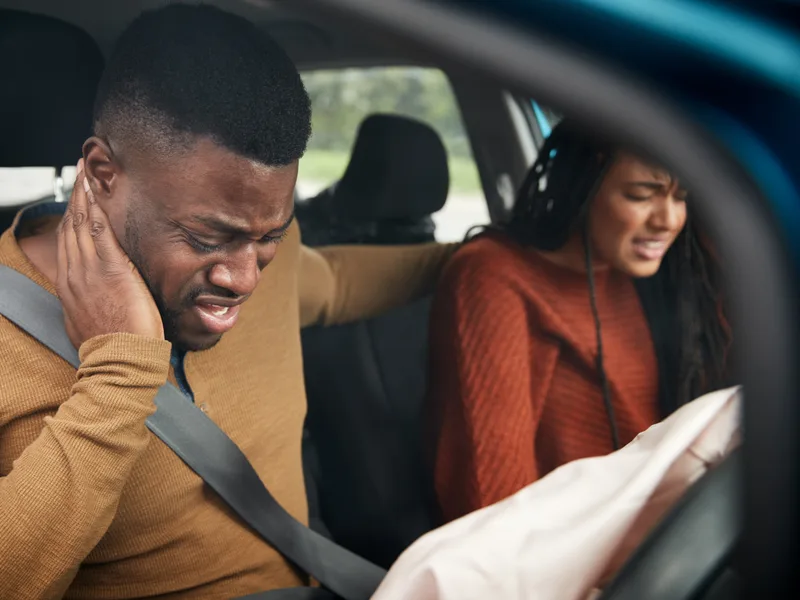
Symptoms of whiplash
- ✓Stiffness or pain in the neck that can show up hours or days after the crash
- ✓Reduced movement, with trouble turning or tipping your head
- ✓Headaches that begin where the skull meets the neck and spread forward
- ✓Tight, sore shoulders, upper back, or the area between the shoulder blades
- ✓Pins and needles, numbness, or weakness reaching into the arms or hands
- ✓Jaw soreness or clicking, since the jaw joint is often involved
- ✓Lightheadedness, foggy focus, or trouble sleeping
Common causes
- Being rear-ended or hit from the side in a car (the usual cause)
- Head-on and T-bone crashes
- Contact on the field or ice, such as football, hockey, or heading a soccer ball
- Slips and falls that jerk the head without warning
- Thrill rides or any sudden start-and-stop motion
- Assault, or a blow to the head or neck
- Existing disc wear or arthritis that makes the strain worse

Our approach
How we treat whiplash in Minneapolis
- Step 1
Thorough exam and documentation
Dr. Olson records how the accident happened, runs orthopedic and neurological tests, and puts your diagnosis and care in writing so your adjuster or personal-injury attorney has what they ask for.
- Step 2
A clear, personalized recovery plan
By the end of your first visit you will know what was hurt, what recovery usually involves, and the steps in your plan, from adjustments and soft-tissue work to corrective exercise for your neck.
- Step 3
Progressive rehab and discharge
Once pain and muscle spasm calm down, our rehab team adds exercises to rebuild strength and control in the neck, so the strain can heal well rather than leaving stiffness or repeat flare-ups behind.
The basics
Understanding whiplash
Whiplash is what happens when a sudden jolt, usually from being hit from behind, throws the head forward and then whips it back, well past the range the neck is built to move through. That fast speed-up and stop can overstretch or tear the neck's muscles, ligaments and joint capsules, and it may also load the discs and irritate the nerve roots. Clinicians grade the injury from a mild soft-tissue strain (Grade I) up to fracture or nerve deficit (Grade III–IV). Most people land in Grade I–II, where conservative chiropractic care is often a reasonable place to start.
A key thing to know is that whiplash often shows up late. Adrenaline after a crash can hide pain, so stiffness, headaches and lost motion may not surface until a day or a few days later. Because of that lag, plenty of people skip an exam and then end up with neck pain that lingers for months. Getting checked early, even if you feel "okay," gives you a baseline on record and lets care begin before scar tissue and protective muscle tightness take hold.

New Patient Special
Start with a $17 visit — and real answers
- FULL Chiropractic Examination
- Chiropractic Consultation
- Digital X-Rays (if needed)
- Personalized Doctor's Report and Findings
- 1st Adjustment
*Offer excludes Medicare and Medicaid patients
Types of whiplash injuries we treat
No two whiplash injuries are quite alike. Which tissues get hurt, and how badly, depends on the speed and direction of the hit, where your head was turned, and your own history. At our south Minneapolis office we often see:
- Grade I–II cervical strain: the most common type, with soft-tissue pain and lost motion but no nerve deficit. It tends to do well with adjustments, soft-tissue work and corrective exercise.
- Cervicogenic headaches after whiplash: headaches that come from the upper neck joints and muscles, often on one side and starting at the base of the skull.
- Whiplash-associated disc injury: the force that strains the muscles can also push a disc out of shape or flare up existing disc problems, and spinal decompression may then be part of the plan.
- Referred arm pain and nerve irritation: when a facet joint or disc presses on a nerve root, pain, tingling or weakness can travel into the shoulder and arm (see neck pain with arm symptoms).
- Whiplash with upper-back involvement: a rear-end crash often strains the mid-back and ribs too, adding upper and mid-back pain on top of the neck pain.
- Occupational or on-the-job accident whiplash: if the crash happened while you were working, we coordinate with workers’ compensation; our work injury page covers that.
When to see a chiropractor in Minneapolis
Here is the main point: don’t wait to find out how you feel. Whiplash pain is known for showing up late, often a day or a few days after the crash, once adrenaline fades and swelling builds. By then, guarded muscles and inflammation are already slowing healing.
Schedule an exam soon after any collision, even a slow-speed bump, and sooner still if you have:
- Pain or stiffness as you turn or tip your head
- New headaches at the back of the skull since the accident
- Soreness or tightness through the shoulders or upper back
- Numbness, tingling, or heaviness in the arms or hands
- Dizziness, trouble concentrating, or unusual tiredness
- Clicking or pain in the jaw that began after the crash
Red-flag warning: Severe pain together with nerve symptoms (lost strength, lost bladder or bowel control, or any sign of stroke) calls for emergency care first, before any chiropractic visit. We check for these signs at every first visit and refer you out right away if they turn up.
What to expect at your first visit
The first appointment centers on a careful evaluation before treatment starts. Dr. Olson will:
- Take a full accident history: which way you were hit, how fast, where your head was turned, whether airbags went off, and when each symptom began.
- Perform orthopedic and neurological testing: range-of-motion measurements, strength checks and nerve-tension tests that show which tissues were hurt.
- Screen for red flags: signs that call for imaging or emergency care (fracture, ligament instability, nerve deficit) are ruled out before any hands-on work.
- Provide written documentation: a formal report of findings, diagnosis and treatment plan that you can hand to your insurer, no-fault adjuster or personal-injury attorney.
- Begin care the same day: if the exam shows it is safe, most people get their first adjustment or soft-tissue treatment before leaving.
You leave understanding what was hurt, how the recovery plan will go, and which records now exist for your claim. If you’d like to know about coverage first, see our payment options page.
Drug-free whiplash recovery, without medication or surgery
The usual route for whiplash, with muscle relaxants, anti-inflammatories and a neck collar, can dull pain for a few days, yet it does little to bring back joint motion, help soft tissue heal, or head off long-term stiffness. Surgery is rarely needed for Grade I–II whiplash.
Chiropractic care works another way. Adjustments help the small facet joints of the neck move normally again, which can ease nerve irritation and interrupt the cycle of pain and spasm. Massage and soft-tissue work loosen the knots and adhesions that form in hurt muscles. Corrective exercise strengthens the deep neck muscles that help guard against a repeat injury. The aim is a neck that turns freely, hurts less and stays that way, without relying on pain pills or recovering from an operation. For crash-specific details, read about our auto accident care.
If your exam shows you need medication, imaging or a specialist, we will help set that up promptly and tell you plainly why.
Why Minneapolis-area patients choose Nokomis Chiropractic and Wellness
People from Minneapolis, Richfield, Edina, Bloomington and St. Louis Park come to us after a crash because they want hands-on care and the careful records that no-fault and personal-injury claims call for. Dr. Jonathan Olson keeps clear, organized injury records, works directly with Minnesota no-fault carriers, and shapes each recovery plan around your specific collision instead of a one-size-fits-all routine.
If the crash was yesterday, or your pain only showed up days later, now is a good time to get checked. See our New Patient Special to get started, or book your exam online.
Why choose chiropractic
Chiropractic care vs. the typical whiplash response
| Comparison factor | Chiropractic Care | Pain Meds & Surgery |
|---|---|---|
| Addresses the root cause | ✓Works on joint motion and injured soft tissue | ✕Quiets pain for a while |
| Drug-free and non-invasive | ✓Always | ✕Rarely |
| Insurance documentation | ✓Detailed written records on request | ✕Records are often brief |
| Risk of side effects | ✓Low | ✕Higher (dependency, surgical risks) |
| Restores range of motion | ✓A focus at every visit | ✕Not often the main goal |
| Prevents chronic pain | ✓Early care can help lower the risk | ✕Lingering pain is common |
Treatment options
Services we use to relieve whiplash
Chiropractic Care
Chiropractic care in Minneapolis with Dr. Jonathan Olson. Exam-guided adjustments for back pain, neck pain and headaches at our Lyndale Ave S office.
Learn more →Spinal Decompression
Spinal decompression in Minneapolis at Nokomis Chiropractic. A gentle, non-surgical stretch for herniated discs, sciatica and long-term neck or back pain.
Learn more →Auto Accident Care
Auto accident care in Minneapolis for whiplash, neck and back injuries. Drug-free chiropractic plus careful records for your Minnesota no-fault claim.
Learn more →Massage Therapy
Massage therapy in Minneapolis that supports chiropractic care, easing tight muscles linked to neck pain, whiplash and headaches. Most insurance accepted.
Learn more →Electrotherapy
Electrotherapy in Minneapolis at Nokomis Chiropractic. TENS and EMS pulses help ease muscle spasm and pain signals during injuries and flare-ups, drug-free.
Learn more →Related conditions
Other conditions we treat in Minneapolis
Patient reviews
What our Minneapolis patients say
“Love the way they operate and accommodate the schedules ❤️❤️❤️”
“Perfect place and professional staff”
“Just the best in the world. Sweet staff! Excellent customer care and treatment. Thanks all!!!❤️❤️❤️”
I feel fine after my accident. Do I still need to be seen?+
Yes. Whiplash pain often shows up a day or more later, once adrenaline wears off. An early exam gives you a baseline on record, can find joint and ligament strain before it stiffens, and starts the paperwork that is harder to build after a gap in care.
How soon after a car accident should I see a chiropractor?+
As soon as you can, ideally within the first few days. Starting early gives your recovery a head start and sets a clear timeline for any insurance or legal claim. Waiting several weeks can make both your healing and your claim harder.
Will my auto insurance (PIP) cover chiropractic care after an accident?+
Minnesota requires Personal Injury Protection (no-fault) coverage, and it often pays for chiropractic exams and care after a car accident. Our office works with no-fault claims every week and can help you check your benefits before your first visit.
Can I use the at-fault driver's insurance to pay for my treatment?+
Yes. When another driver caused the crash, their liability coverage may pay your medical bills and other damages. We keep detailed records of your diagnosis and treatment that support an injury claim, and many patients pass them straight to their attorney.
Do I need an attorney for a whiplash claim?+
It depends on your case. What we do know is that clear, early medical records make any claim easier to support. We provide organized records when you ask and are used to working with personal-injury attorneys across the Twin Cities.
My symptoms started days after the accident. Is it too late to come in?+
No. Delayed pain is typical of whiplash, and insurers and courts know it. Come in once you notice symptoms, and Dr. Olson will link them to how the injury happened and document it properly for your claim.
How is whiplash different from regular neck pain?+
Whiplash comes from a sudden snap of the head that can hurt muscles, ligaments, facet joints and discs together. It often brings a mix of neck pain, headache, arm symptoms and dizziness that sets it apart from everyday [neck pain](/symptoms/neck-pain/), and recovery can take longer.
How many visits will I need to recover?+
That depends on how badly the tissues were strained, so your plan is set after your exam. Dr. Olson then lays out a plan with a clear end point, not open-ended care, plus checkpoints so you can see how you are doing.
Is chiropractic adjustment safe right after a whiplash injury?+
Once fracture and ligament instability are ruled out by screening or imaging, chiropractic care is generally considered a safe option. Every patient is screened before treatment starts, and if we find anything that needs emergency care or a specialist, we tell you right away.
Can whiplash cause long-term or chronic problems?+
Whiplash that goes untreated, or is treated too little, can turn into ongoing neck pain, repeat headaches and stiffness that hangs on for years. Early, fitting care that includes soft-tissue work and corrective exercise can help lower that risk.
Do you treat whiplash-related headaches and dizziness too?+
Yes. Headaches from the neck and dizziness after whiplash are common and come from the same injured upper-neck structures. Improving joint motion and easing neck muscle tension often helps with both. Our [headaches page](/symptoms/headaches-migraines/) explains more.