
Disc Injury Treatment in Minneapolis
Herniated disc treatment in Minneapolis from a chiropractor for disc injury. Non-surgical spinal decompression, adjustments and rehab, no drugs or surgery.
Chiropractic care for disc injury
Get to the root of your disc injury
Also known as: Herniated Disc, Bulging Disc, Slipped Disc, Disc Herniation
For herniated disc treatment in Minneapolis, Dr. Jonathan Olson at Nokomis Chiropractic and Wellness offers care as a chiropractor for disc injury through his Comprehensive Treatment Approach (CTA). He usually starts with non-surgical spinal decompression, then layers in chiropractic adjustments and rehab exercises to ease pressure on the disc and help you move again. If a bulging or herniated disc has you dealing with shooting leg pain, numb fingers or a back too stiff to get out of bed, the plan is drug-free with no downtime.
Dr. Jonathan Olson, DC reviews the information on this page for accuracy.
Last updated
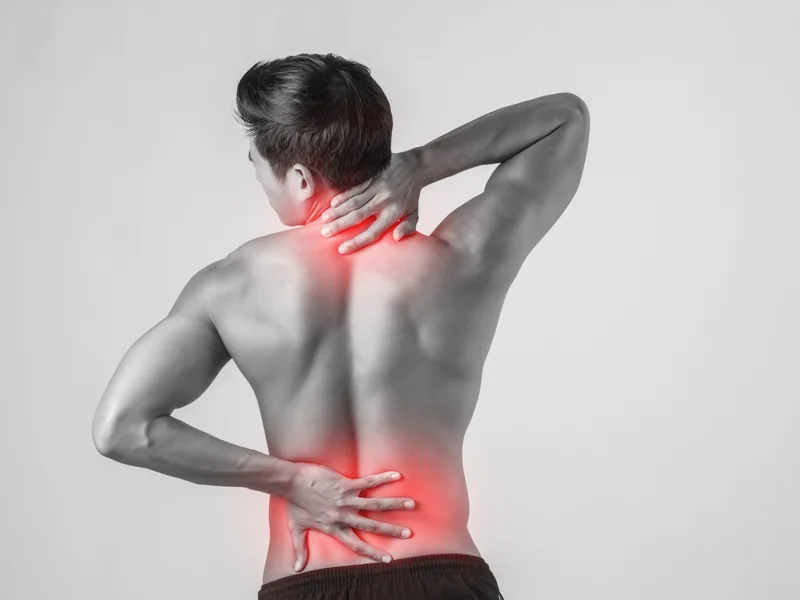
Symptoms of disc injury
- ✓Burning or sharp pain in the neck or low back
- ✓Pain that travels down an arm or a leg (sometimes into the hand or foot)
- ✓Tingling or numbness in a hand, arm, foot or leg
- ✓Weakness in the muscles of the affected arm or leg
- ✓Pain that gets worse with coughing, bending forward or long periods of sitting
- ✓Easing of pain when you lie down or shift position
- ✓Stiffness and limited range of motion in the spine
Common causes
- Disc wear with age (discs lose water and become less resilient)
- Sudden twisting or lifting heavy loads with poor form
- Long hours of sitting and forward posture that load the neck and low-back discs
- Repeated strain from work or sports
- Trauma from a fall, sports impact or car accident
- An inherited tendency toward weaker discs
- Extra body weight adding compressive load to the spine

Our approach
How we treat disc injury in Minneapolis
- Step 1
Thorough exam
Dr. Olson goes over your history and runs orthopedic, neurological and movement tests to find the disc level involved and check the nerves. Digital X-rays are taken only when they will change your care.
- Step 2
A clear, personalized plan
You hear in plain words what the exam showed and which disc is likely involved, then get a specific care plan built on decompression, adjustments and rehab, with a defined finish.
- Step 3
Comprehensive treatment & rehab
Non-surgical spinal decompression takes load off the disc, adjustments help nearby joints move, and rehab exercises build the support that helps protect against flare-ups.
The basics
Understanding disc injury
Between the vertebrae of your spine sit 23 rubbery discs that cushion impact and let you bend and turn. Every disc has a tough outer ring (annulus fibrosus) wrapped around a soft, gel-like core (nucleus pulposus). If that outer ring weakens or tears, whether from a sudden injury, repeated strain or years of slouching, the gel can push outward or break through. The bulge or herniation may press on a nearby nerve root and set off pain, numbness or weakness that travels far past the spine.
Many disc injuries are a good fit for conservative, non-surgical care, especially when the mechanical load on the disc is eased early. Dr. Olson screens for the less common cases that need a surgical opinion, such as leg weakness that keeps getting worse or bowel or bladder changes, and he refers those patients promptly.

New Patient Special
Start with a $17 visit — and real answers
- FULL Chiropractic Examination
- Chiropractic Consultation
- Digital X-Rays (if needed)
- Personalized Doctor's Report and Findings
- 1st Adjustment
*Offer excludes Medicare and Medicaid patients
Types of disc injury we treat
Disc problems are not all alike. At our Lyndale Ave S office in south Minneapolis, we often help people with:
- Herniated disc: the inner gel has broken through the outer ring and presses on a nerve root, often bringing sharp pain that travels, numbness or weakness. Our pinched nerve page explains how nerve pressure is handled.
- Bulging disc: the outer ring is still whole but bows outward under load. It can bother nearby nerves and feel much like a herniation, and may turn into one if the load stays high.
- Degenerative disc disease: slow loss of disc height and water over the years, which can lead to ongoing back pain, stiffness and a higher chance of herniation or nerve pressure. Non-surgical spinal decompression is often part of care, even in degenerative cases.
When a disc injury has already led to shooting leg pain or sciatica, our sciatica page covers it in more depth, since the disc and nerve are treated together.
When to see a chiropractor in Minneapolis
A disc injury tends to linger while the mechanical stress behind it is still there. Book an exam if you notice:
- Pain that shoots into an arm or leg, or wraps around the ribs
- Tingling, numbness or a “dead” feeling in a foot or hand
- Neck or back pain that lasts past a week or keeps coming back
- Symptoms that flare with bending, sitting, coughing or sneezing
- Pain that began after a fall, a car accident or a heavy lift
Get emergency care (an ER, not a chiropractic office) if you suddenly lose bladder or bowel control, or your leg weakness gets worse quickly. These signs are uncommon but serious and need medical attention right away.
What to expect at your first visit
Expect your first appointment to take about 45–60 minutes. Most of it goes toward understanding the problem before treating it:
- We hear your history: how and when the pain began, what helps or hurts, and how it is affecting your work and daily life.
- Dr. Olson examines you: orthopedic and neurological tests (straight-leg raise, dermatomal sensation, reflex and strength checks) to find the disc level and how much the nerve is involved.
- He explains the findings: in plain language, including the disc that is likely involved and whether conservative care makes sense for you.
- You get your plan: a specific care plan that combines spinal decompression, adjustments and rehab exercises, with a clear endpoint and honest expectations.
Many patients start their first decompression session or other treatment the same day, once the exam shows they are a good candidate.
Non-surgical disc relief, without medication or surgery
Surgery and ongoing pain medication do have their place, but they are seldom the first step for a disc injury. Chiropractic care, and non-surgical spinal decompression in particular, offers another path: ease pressure on the disc and nerve, give the area time to calm down, and build up the support around it.
Spinal decompression gently draws apart the vertebrae on either side of the injured disc. It is designed to lower pressure inside the disc and take load off the nerve, with no drugs and no incisions. Sessions are meant to be gentle, and Jessica, our rehab supervisor, helps guide them.
Dr. Olson’s Comprehensive Treatment Approach pairs decompression with chiropractic adjustments (including low-force ArthroStim adjusting when it suits you) to help neighboring joints move, rehab exercises to build the core and posterior-chain support the disc depends on, and home exercises plus tips on posture and movement. This combined approach works on both the pain and the mechanics behind it.
If your exam or progress ever points to more imaging, a specialist or a surgical opinion, Dr. Olson will tell you honestly and help line up that next step.
Why Minneapolis-area patients choose Nokomis Chiropractic and Wellness
People from Minneapolis, Richfield, Edina, Bloomington and St. Louis Park choose us for herniated disc treatment in Minneapolis because we are straightforward about what your disc needs, then follow through. Dr. Jonathan Olson, with more than 36 years in practice, blends spinal decompression, careful chiropractic adjustments and rehab exercises into one clear plan with a defined finish, aimed at calming your disc injury and helping keep it from coming back.
Want to know whether conservative disc care is right for you? The New Patient Special makes your first visit simple, and you can book an appointment online in a minute or two.
Why choose chiropractic
Chiropractic care vs. the typical disc-injury routine
| Comparison factor | Chiropractic Care | Pain Meds & Surgery |
|---|---|---|
| Works on disc pressure directly | ✓Spinal decompression unloads the disc | ✕Medication dulls the pain signal |
| Drug-free & non-invasive | ✓Always | ✕Rarely |
| Chance of side effects | ✓Low | ✕Higher (meds, surgical complications) |
| Matched to your disc level | ✓Focused care plan | ✕Standard protocol |
| Builds long-term spinal support | ✓Rehab and core work are part of care | ✕Rarely covered |
| Recovery style | ✓Active & gradual | ✕Surgical recovery can be long |
Treatment options
Services we use to relieve disc injury
Chiropractic Care
Chiropractic care in Minneapolis with Dr. Jonathan Olson. Exam-guided adjustments for back pain, neck pain and headaches at our Lyndale Ave S office.
Learn more →Spinal Decompression
Spinal decompression in Minneapolis at Nokomis Chiropractic. A gentle, non-surgical stretch for herniated discs, sciatica and long-term neck or back pain.
Learn more →Related conditions
Other conditions we treat in Minneapolis
Patient reviews
What our Minneapolis patients say
“Love the way they operate and accommodate the schedules ❤️❤️❤️”
“Perfect place and professional staff”
“Just the best in the world. Sweet staff! Excellent customer care and treatment. Thanks all!!!❤️❤️❤️”
Can a herniated disc heal without surgery?+
Often it can. Conservative care such as spinal decompression aims to ease pressure on the disc and nerve so the area has a chance to settle. Dr. Olson refers for a surgical opinion if red flags appear, like worsening weakness or bowel or bladder changes.
What is the difference between a herniated disc and a bulging disc?+
With a bulging disc, the outer ring stays intact but pushes outward. With a herniated (ruptured) disc, the ring has torn and the inner gel has come through. Either one can press on nerves, cause similar symptoms and often be managed with conservative care.
How does spinal decompression help a disc injury?+
Non-surgical spinal decompression gently draws the vertebrae apart in slow cycles. That is designed to lower pressure inside the disc and ease the load on an irritated nerve. Jessica, our rehab supervisor, helps run sessions at our south Minneapolis office.
How do I know if my back pain is disc-related?+
Disc pain tends to travel into an arm or leg, gets worse with bending or sitting, and may bring numbness or tingling. A careful orthopedic and neurological exam, sometimes with digital X-rays, is the dependable way to tell. Book an exam for a clear answer.
How many visits will I need?+
That depends on which disc is involved, how long the symptoms have been there and how your body responds to care. Once the exam is done, Dr. Olson gives you a specific plan with realistic goals and a clear endpoint, not open-ended visits.
Do I need an MRI before coming in?+
Not always. Many disc injuries can be assessed with a hands-on exam at the first visit. Dr. Olson takes digital X-rays or refers out for other imaging only when the results would change your care plan, and he explains why first.
Is chiropractic adjustment safe when I have a disc injury?+
When the technique suits the condition, yes. Dr. Olson adjusts his approach for disc patients, often using lower-force methods and combining them with decompression, and he screens for any reason not to treat before care begins.
What red flags should send me to the ER instead of a chiropractor?+
Go to an emergency room right away if you suddenly lose bladder or bowel control, notice leg weakness that is getting worse quickly, or have severe pain after a major injury. These signs can point to a serious problem that needs urgent medical care.
Can disc injuries come back after they heal?+
They can, if the habits and weak spots behind them, such as a weak core, poor posture or poor lifting form, are not addressed. That is why every plan includes rehab exercises and home exercises to build the support around the disc.
Do you treat cervical (neck) disc injuries as well?+
Yes. A cervical disc injury can bring arm pain, numb hands and a stiff neck. Dr. Olson treats it with the same blend of spinal decompression, adjustments and rehab exercises that he uses for low-back disc problems.
Will my insurance cover disc treatment?+
We accept most insurance and verify your benefits before your first visit. Disc injuries from a car accident are usually covered by Minnesota no-fault (PIP). If you are uninsured, ask about self-pay care plans and HSA/FSA payment options.