
Shockwave Therapy in Minneapolis
Shockwave therapy in Minneapolis at our Lyndale Ave S office. Non-invasive sound waves for stubborn tendon problems like plantar fasciitis and tennis elbow.
Nokomis Chiropractic and Wellness
Shockwave Therapy at Nokomis Chiropractic and Wellness
Shockwave therapy in Minneapolis is one of the tools Dr. Jonathan Olson uses within his Comprehensive Treatment Approach (CTA) at Nokomis Chiropractic and Wellness. The treatment is non-invasive: a handheld device directs acoustic pressure waves into injured tendons and soft tissue to encourage a healing response that has stalled. Dr. Olson reaches for it with stubborn problems such as plantar fasciitis and tennis elbow, especially when other conservative care has not fully helped.
Dr. Jonathan Olson, DC reviews the information on this page for accuracy.
Last updated
How it works
What to expect with shockwave therapy
- Step 1
Assessment and mapping
Dr. Olson examines the injured area, reviews your history and uses palpation to map exactly where the tendon or soft tissue is involved, then chooses shockwave settings for your condition.
- Step 2
Focused shockwave treatment
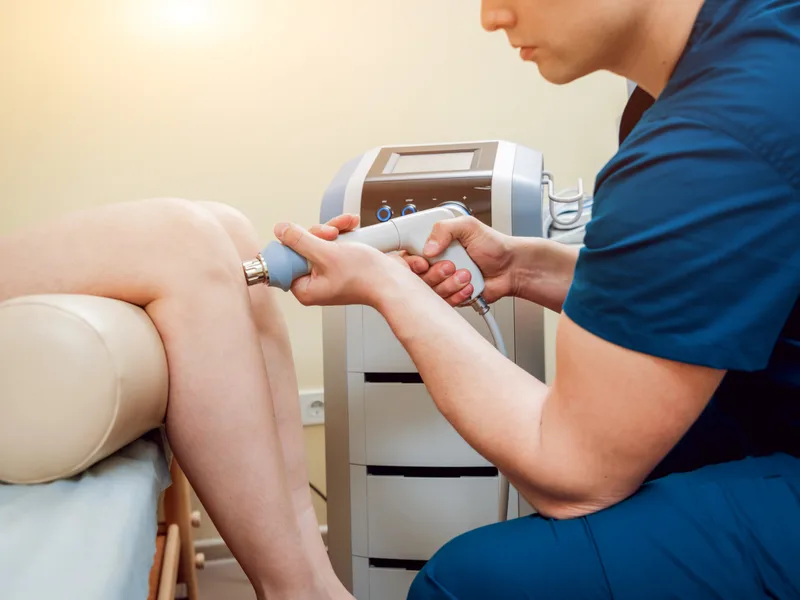
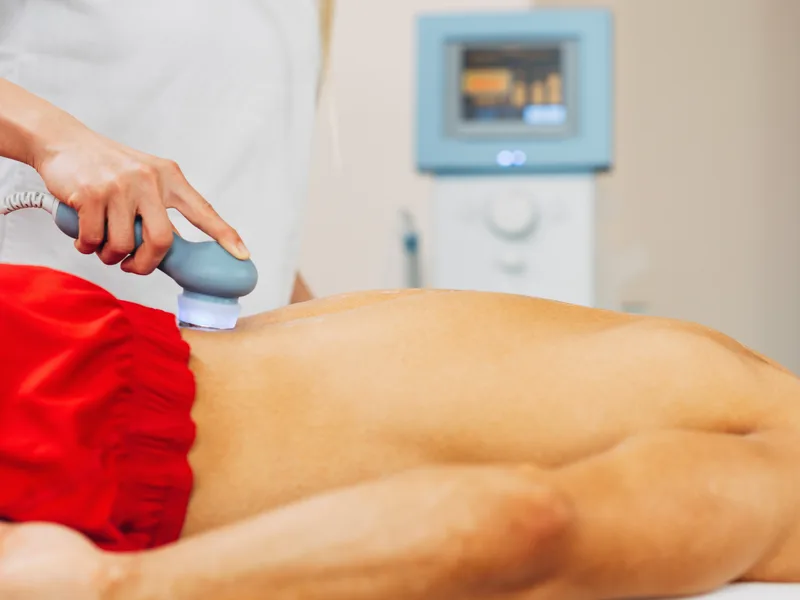
The applicator glides slowly over the area as it delivers acoustic pulses. A session usually lasts 5–15 minutes, and most people feel deep pressure or a mild ache that settles soon after the device stops.
- Step 3
Rehab and home support
Shockwave is paired with targeted stretches, loading exercises and supporting services such as electrotherapy or massage therapy to keep your recovery moving between visits.
Why patients choose it
Benefits of shockwave therapy
Aims to restart repair in injuries that have stalled
Non-invasive, with no needles, incisions or downtime
Used for calcific deposits in tendons and shoulders
A focused plan with a set timeframe and clear endpoint
An option to explore before cortisone injections or surgery
Used for plantar fasciitis, tennis elbow, shoulder tendinopathy and more
The basics
About shockwave therapy
Tendons and ligaments get relatively little blood flow, which helps explain why long- running injuries in these tissues (plantar fasciitis, rotator cuff tendinopathy, calcific shoulder, lateral epicondylitis or tennis elbow) can be slow to heal or seem to stop improving. The area may not be freshly inflamed anymore, yet the underlying problem never quite cleared up. Common treatments can ease symptoms for a while without changing what is going on in the tissue.
Shockwave therapy takes a different angle. Each pressure wave places a small mechanical stress on the targeted tissue, which is thought to act as a new signal for the body to respond to. That response is believed to involve improved blood flow, the release of growth factors and remodeling of collagen. The goal is to help restart repair in tissue that has not improved with rest, stretching and anti-inflammatory care, with your progress checked as treatment goes along.
New Patient Special
Start with a $17 visit — and real answers
- FULL Chiropractic Examination
- Chiropractic Consultation
- Digital X-Rays (if needed)
- Personalized Doctor's Report and Findings
- 1st Adjustment
*Offer excludes Medicare and Medicaid patients
What is shockwave therapy?
Shockwave therapy, known formally as extracorporeal shockwave therapy (ESWT), is a non-invasive treatment. A handheld device sends focused acoustic pressure waves through the skin and into injured tendons, ligaments or other soft tissue. Those waves place a controlled mechanical stress on the tissue, which is thought to set off the body’s own repair processes, including new blood vessel growth, growth factor release and collagen remodeling, to help restart healing that has stalled.
The name sounds intense, but most people tolerate the treatment well. It uses no needles, no incisions and no medication. You may feel deep pressure or a mild ache while it runs, and that usually fades soon after the device stops. Most patients go right back to their day afterward.
Shockwave therapy in Minneapolis at our office is most often used for plantar fasciitis, tennis elbow (lateral epicondylitis), calcific shoulder and rotator cuff tendinopathy, all problems where the tissue has been hurt long enough that it has trouble recovering by itself.
What to expect
The first shockwave visit starts with a short assessment. Dr. Olson goes over your history, examines the painful area and uses palpation to find exactly where the injured tissue is most reactive. That mapping step matters, because aiming the energy carefully is a big part of getting the most from each session.
You lie comfortably on the table while the applicator, with a little coupling gel, is placed on the skin and moved slowly across the injured area as it delivers pulses. Depending on the area and the condition, a session runs about 5–15 minutes. Many people describe a deep vibration or pressure, and the most tender spots may ache briefly before easing as the device moves along.
You do not need recovery time afterward. Some mild soreness for a short while is common and expected. Dr. Olson tracks how you respond at each visit and uses that to guide the rest of your plan.
Who it helps
Shockwave is typically considered for long-running tendon and soft-tissue problems that standard conservative care has not resolved. If you have stretched, iced or rested an injury for months and it still is not right, shockwave may be worth discussing at your exam.
Conditions we often treat with shockwave:
- Plantar fasciitis: heel pain that hangs on because the plantar fascia is irritated or worn down
- Elbow pain (tennis and golfer’s elbow): lateral or medial epicondylitis that has not fully healed
- Shoulder pain and rotator cuff tendinopathy: including calcific tendinitis in the shoulder
- Overuse injuries: ongoing strain patterns in athletes and other active people
Shockwave is not right for everyone, and your exam screens for the few reasons it would not be. Many people with these long-running soft-tissue problems turn out to be candidates, and Dr. Olson will explain what he finds.
Why choose Nokomis Chiropractic and Wellness
Shockwave works best inside a full plan rather than as a one-off procedure. At Nokomis Chiropractic and Wellness, Dr. Jonathan Olson, in practice for more than 36 years, combines it with targeted rehab, electrotherapy, massage therapy and other tools that help keep progress going between visits. Active patients can also learn about our athlete care. You get a clear explanation, an honest timeline and a plan built around your injury instead of a standard routine.
We see patients from Minneapolis, Richfield, Edina, St. Louis Park and Bloomington. Ready to get that stubborn injury moving in the right direction? Visit our New Patient page or contact us to schedule your exam.
What it helps
Conditions we treat with shockwave therapy
Where can I get shockwave therapy near me in Minneapolis?+
You can get it at Nokomis Chiropractic and Wellness, 5313 Lyndale Ave S in south Minneapolis. People come to us from Richfield, Edina, Bloomington, St. Louis Park and St. Paul. Call (612) 822-0149 to schedule an exam and see whether shockwave fits your injury.
What is shockwave therapy?+
Shockwave therapy, also called extracorporeal shockwave therapy or ESWT, uses a handheld device to send acoustic pressure waves through the skin into injured tendons or soft tissue. It is intended to boost blood flow and encourage the body's own repair process in areas that have stopped improving.
Does shockwave therapy hurt?+
You will likely feel deep pressure, vibration or a brief ache during treatment, mostly over the most tender spot. Most people find it tolerable, and the feeling usually fades shortly after the session ends. Dr. Olson adjusts the intensity to keep you comfortable throughout.
How many shockwave sessions will I need?+
That depends on your injury, how long you have had it and how you respond, so there is no set number. After your exam, Dr. Olson gives you a realistic plan with a clear timeline and checks your progress at each visit.
Is shockwave therapy safe?+
For most people, yes. It is non-invasive and drug-free. Every patient is screened first, because a few conditions, such as blood-clotting disorders or an active infection in the area, rule it out. Your intake and exam at our Lyndale Ave S office check for these.
Who is a good candidate for shockwave therapy?+
People with long-lasting tendon or soft-tissue injuries, such as plantar fasciitis, tennis elbow, shoulder tendinopathy, calcific deposits or overuse injuries, that have not fully improved with rest, stretching or other conservative care are often good candidates. Dr. Olson confirms candidacy at your exam.
Can shockwave therapy help plantar fasciitis?+
Plantar fasciitis is one of the most common reasons people try shockwave therapy. If stretching, orthotics and rest have not settled your heel pain, Dr. Olson may recommend it to help prompt the repair response the tissue has been lacking.
What is the recovery like after a session?+
There is no downtime, and most people go straight back to their usual activities. Some notice mild soreness in the treated area for a short time afterward, a bit like the soreness after exercise. Let Dr. Olson know how you feel at your next visit.
Will my insurance cover shockwave therapy?+
It depends on your plan. Many policies do not cover ESWT yet, while some do, particularly for plantar fasciitis. We accept most insurance, check your benefits before your first visit and explain self-pay options if you need them.
How does shockwave therapy compare to cortisone injections?+
Cortisone is generally used to calm inflammation for a period of time rather than to address the tendon itself. Shockwave is designed to encourage the body's own repair process in long-running tendon problems, and it does not involve needles or medication. Dr. Olson can discuss both with you.
Can shockwave be combined with other therapies?+
Yes, and it usually is. Dr. Olson often pairs shockwave with electrotherapy, massage therapy or a targeted rehab program run by our rehab supervisor Jessica, so the different parts of your Comprehensive Treatment Approach support each other between sessions.
From our blog
Articles about shockwave therapy
- Top 10 Best Chiropractors in Minneapolis, MN: Trusted Clinics and Pain Relief Explore the 10 best chiropractors in Minneapolis, MN. Compare trusted clinics, services, experience, and patient care to find the right chiropractor for you. Read the article →
- How Much Does a Chiropractor Cost in Minneapolis? What chiropractic care costs at our south Minneapolis clinic: the $17 first visit, how insurance, no-fault and Medicare work, and self-pay options. Read the article →
Explore more
Related services
Patient reviews
What our Minneapolis patients say
“Love the way they operate and accommodate the schedules ❤️❤️❤️”
“Perfect place and professional staff”
“Just the best in the world. Sweet staff! Excellent customer care and treatment. Thanks all!!!❤️❤️❤️”