
Spinal Decompression in Minneapolis
Spinal decompression in Minneapolis at Nokomis Chiropractic. A gentle, non-surgical stretch for herniated discs, sciatica and long-term neck or back pain.
Nokomis Chiropractic and Wellness
Spinal Decompression at Nokomis Chiropractic and Wellness
Spinal decompression in Minneapolis is a key piece of Dr. Jonathan Olson's Comprehensive Treatment Approach (CTA) at Nokomis Chiropractic and Wellness. The therapy uses a motorized, computer-guided table to lengthen the spine in slow, measured cycles that take pressure off squeezed discs and nerves. Dr. Olson combines it with chiropractic adjustments and focused rehab, giving herniated discs, sciatica and long-standing neck or back pain a drug-free path that does not involve injections or surgery.
Dr. Jonathan Olson, DC reviews the information on this page for accuracy.
Last updated
How it works
What to expect with spinal decompression
- Step 1
Thorough candidacy exam
Before any session, Dr. Olson reviews your history and runs orthopedic and neurological tests to confirm decompression fits your disc problem and to screen for reasons it would not be appropriate.
- Step 2
A personalized decompression plan
You get a clear schedule with a set timeframe, plus tension levels and angles chosen for your spine rather than a one-size routine. We explain what each step involves and how we will measure your progress.
- Step 3
Decompression + adjustments + rehab
Visits combine the decompression session with adjustments that help joints move well and core exercises that support the disc and help keep pain from coming back.
Why patients choose it
Benefits of spinal decompression
Non-surgical, with no incisions, anesthesia or recovery period
Drug-free care for disc, nerve and radiating pain
Comfortable, and many patients find sessions relaxing
Aims to reduce pressure on the disc and the nerve together
Combines with adjustments and rehab to help progress last
A conservative option to explore before considering surgery
The basics
About spinal decompression
Spinal discs sit between the vertebrae like cushions, soaking up impact and letting the spine bend and turn. If a disc bulges, herniates or thins out with everyday wear, it can crowd a nearby nerve and cause pain, numbness or weakness that travels into a leg or an arm. Common fixes such as rest, anti-inflammatory medication and injections may calm the symptoms for a time, yet they do not change the pressure on the disc or the nerve. Decompression is designed to work on both.
On the table, slow cycles of traction lower the pressure inside the disc, a gentle suction-like effect that encourages bulging material to move back toward the center and allows fluid to return to the disc. The muscles and stiff joints around it also get a chance to relax. Sessions typically last 15 to 20 minutes, and many people find them surprisingly restful. At our Lyndale Ave S office, decompression is paired with adjustments and rehab exercises, led by our rehab supervisor Jessica, to help your progress hold after the plan is complete.
New Patient Special
Start with a $17 visit — and real answers
- FULL Chiropractic Examination
- Chiropractic Consultation
- Digital X-Rays (if needed)
- Personalized Doctor's Report and Findings
- 1st Adjustment
*Offer excludes Medicare and Medicaid patients
What is spinal decompression?
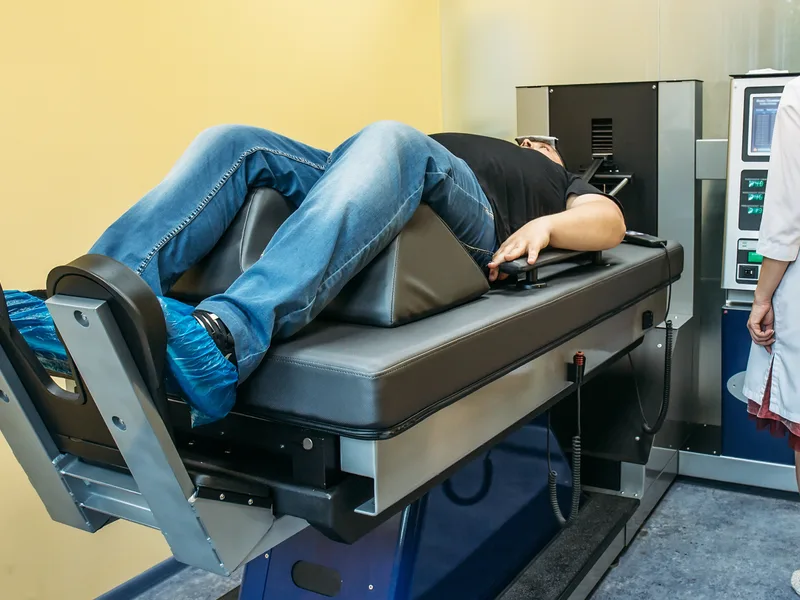
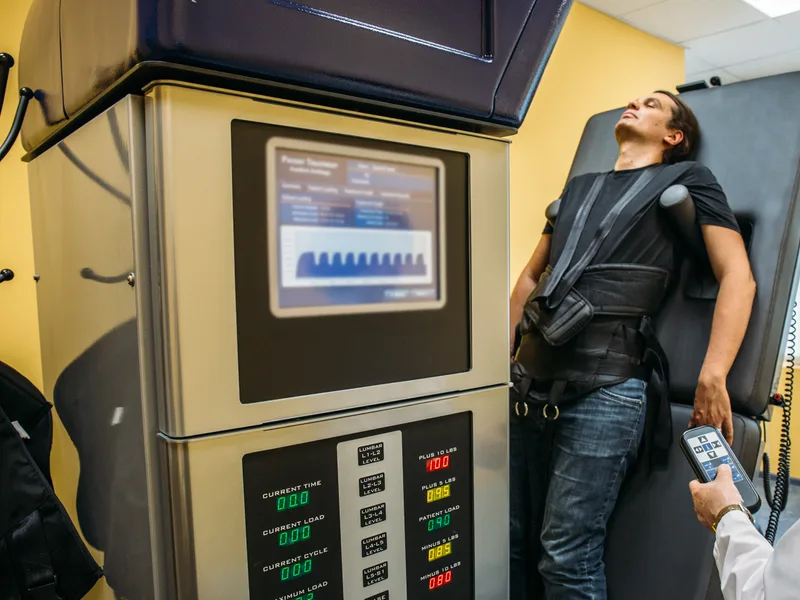
Non-surgical spinal decompression is a type of motorized traction that lengthens the spine slowly through cycles a computer controls. As the table pulls and then eases off in a measured rhythm, pressure inside the targeted disc drops. That lower pressure is meant to help bulging or herniated material settle back toward the center and let fluid move back into the disc. The aim is less load on the disc and on the nerves that exit the spine next to it.
Older manual traction pulls in one direction at one setting. Computer-guided decompression can be aimed at a particular spinal level and angle, changes tension as it runs, and is set up so the surrounding muscles are less likely to tighten against the pull, which many patients find more comfortable. Each session runs about 15 to 20 minutes, and plenty of people say it is one of the more relaxing parts of their week.
What to expect
Spinal decompression therapy in Minneapolis at our office starts with a candidacy exam. Dr. Olson goes through your history and performs orthopedic and neurological testing. If you have recent imaging, he looks at it too, to pinpoint which disc level is involved and decide whether decompression suits you. When you are a good fit, he maps out your plan, including how often you come in, the tension settings and the angle of pull, all set for your spine.
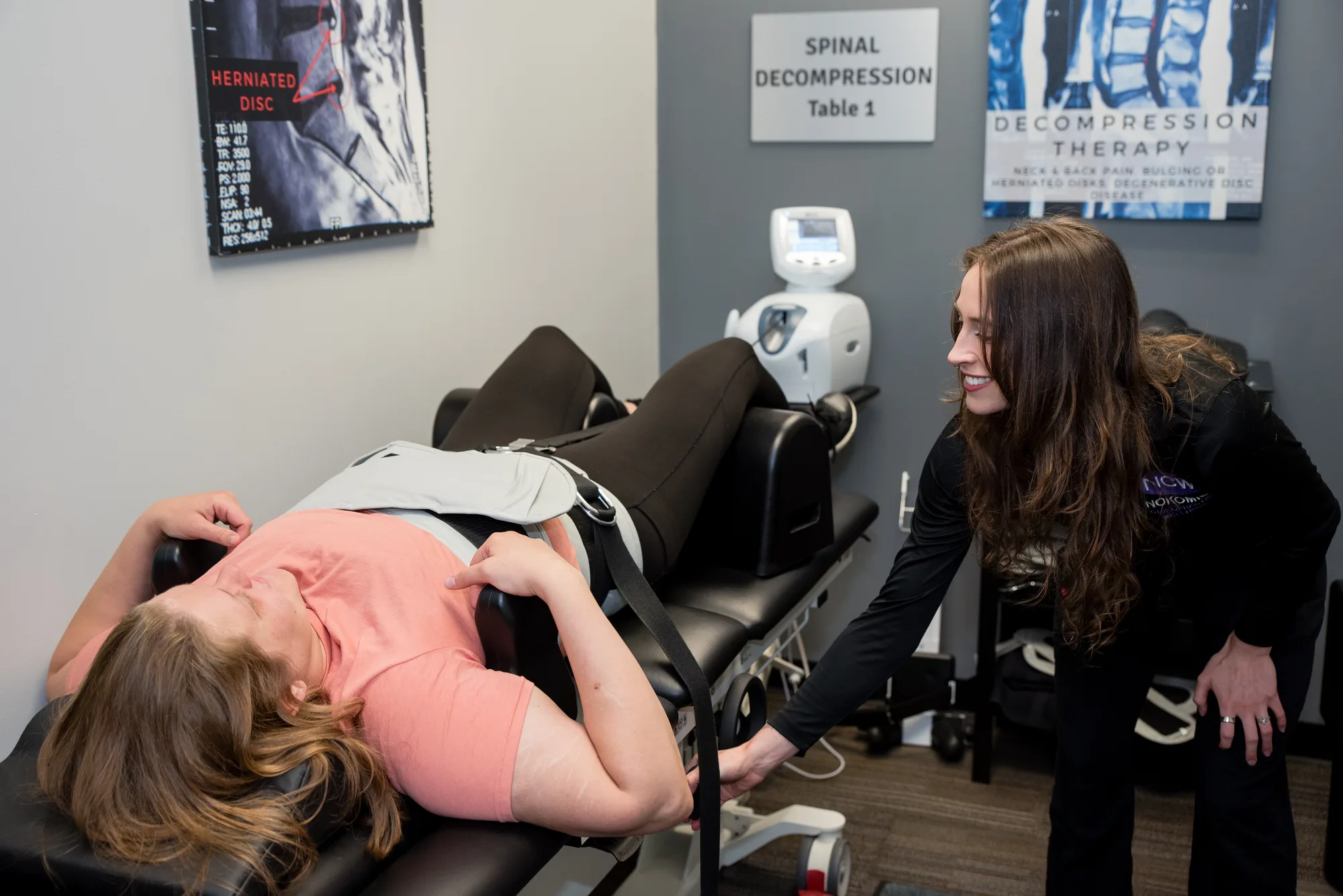
For each session you lie on the motorized table while a harness positions you so the traction focuses on the right disc. The table then moves through slow stretch-and-release intervals. Most people relax, and some fall asleep. Afterward, Dr. Olson often adds a chiropractic adjustment to help the joints move, and Jessica guides you through core and stabilization exercises that support the disc and build on the work done on the table. You can preview some of them on our rehab exercises page.
Progress is tracked at each stage, and your plan is updated based on how your symptoms and strength respond over the course of care.
Who it helps
Decompression is often a good match for people dealing with:
- Herniated or bulging discs in the low back or neck
- Sciatica, meaning pain, numbness or weakness that runs from the low back down a leg
- Pinched nerves that send pain into an arm or leg
- Chronic low back pain that adjustments alone have not settled
- Neck pain with symptoms traveling into the arm
- Degenerative disc disease with ongoing stiffness and nerve irritation
- Leg pain or arm pain linked to a compressed spinal nerve
Decompression usually works best inside a combined plan: it eases disc pressure, adjustments help the joints move properly, and rehab builds the core support that keeps extra load off the disc. If your exam points toward surgery as the better choice, we will be honest with you and help arrange the referral.
Why choose Nokomis Chiropractic and Wellness
People from Minneapolis, Richfield, Edina, Bloomington and St. Louis Park come to us because we look for the cause, not just the symptom. With more than 36 years in practice, Dr. Jonathan Olson brings computer-guided spinal decompression, chiropractic care and focused rehab exercises together in one clear plan with a set timeframe, built to ease pain now and help you stay strong and active.
Wondering whether decompression fits your situation? Our New Patient Special makes the first visit simple, and you can book an appointment online in about a minute.
What it helps
Conditions we treat with spinal decompression
Is spinal decompression safe?+
For the right candidate, yes. It is non-invasive and drug-free, and Dr. Olson confirms you are a good fit during a thorough exam first. He screens for issues such as recent fractures, certain surgical hardware and osteoporosis so the therapy is appropriate for you.
What does decompression feel like?+
Most people find it calm and comfortable, with a slow stretch and release through the low back or neck that lasts about 15 to 20 minutes. You should not feel sharp pulling or pain, and it is common for patients to doze off on the table.
How many sessions will I need?+
That depends on how long you have had the problem and how your disc responds, so there is no standard number. After your exam, Dr. Olson gives you a specific plan with a clear endpoint and reviews it with you as care moves along.
Will my insurance cover spinal decompression?+
Coverage depends on your plan. We accept most insurance and check your benefits before your first visit, then explain what is and is not covered. Self-pay options are also available if your plan does not include decompression.
Can decompression help a herniated or bulging disc?+
That is what it is mainly used for. Lowering the pressure inside the disc during traction is intended to help disc material draw back and take pressure off the nerves. It is commonly used for low-back herniations with sciatica and neck herniations with arm pain.
Is decompression the same as traction?+
They are related but not the same. Traditional traction pulls the spine one way at a constant tension. Computer-guided decompression varies the tension in cycles and can be angled toward a specific disc level, which many patients find more comfortable than older weighted traction.
Can decompression help neck pain and arm pain?+
It can be an option. Cervical decompression applies the same idea to the neck, using guided traction to ease pressure on neck discs and the nerves that run into the arm. It is often considered for cervical disc problems, pinched nerves and arm tingling or numbness.
Who is not a candidate for spinal decompression?+
People with a recent spinal fracture, fusion hardware in the treatment area, severe osteoporosis, cancer in the spine, or pregnancy (for low-back decompression) usually are not candidates. Your exam checks for all of these, and we only move forward when decompression makes sense.
How do I know if my back pain is disc-related?+
Disc pain often travels into a leg (sciatica) or arm, gets worse with sitting or bending forward, and can come with numbness or weakness. An orthopedic and neurological exam, plus imaging when needed, lets Dr. Olson identify the source and whether decompression fits.
What is spinal decompression used for?+
It is used for herniated and bulging discs, degenerative disc disease, sciatica, pinched nerves in the neck or low back, facet syndrome, and lingering neck or back pain that other conservative care has not resolved. If surgery looks like the better route, we will say so and refer you.
From our blog
Articles about spinal decompression
- Top 10 Best Chiropractors in Minneapolis, MN: Trusted Clinics and Pain Relief Explore the 10 best chiropractors in Minneapolis, MN. Compare trusted clinics, services, experience, and patient care to find the right chiropractor for you. Read the article →
- How Much Does a Chiropractor Cost in Minneapolis? What chiropractic care costs at our south Minneapolis clinic: the $17 first visit, how insurance, no-fault and Medicare work, and self-pay options. Read the article →
Explore more
Related services
Patient reviews
What our Minneapolis patients say
“Love the way they operate and accommodate the schedules ❤️❤️❤️”
“Perfect place and professional staff”
“Just the best in the world. Sweet staff! Excellent customer care and treatment. Thanks all!!!❤️❤️❤️”