
Rotator Cuff Injury Treatment in Minneapolis
Rotator cuff injury treatment in Minneapolis with Dr. Olson, a chiropractor for rotator cuff pain: adjustments, soft-tissue work and rehab, no drugs.
Chiropractic care for rotator cuff injury
Get to the root of your rotator cuff injury
Also known as: Rotator Cuff Tear, Rotator Cuff Tendinitis, Shoulder Impingement
If you need rotator cuff injury treatment in Minneapolis, Dr. Jonathan Olson's Comprehensive Treatment Approach (CTA) brings adjustments, soft-tissue therapy and step-by-step rehab together to help you regain strength and range of motion. At our Lyndale Ave S office he sees tendinitis from years of overhead work, impingement from a crowded bursa and partial tears from falls or collisions. You get a conservative, drug-free plan, and a straight answer and a referral if surgery turns out to be the better next step.
Dr. Jonathan Olson, DC reviews the information on this page for accuracy.
Last updated
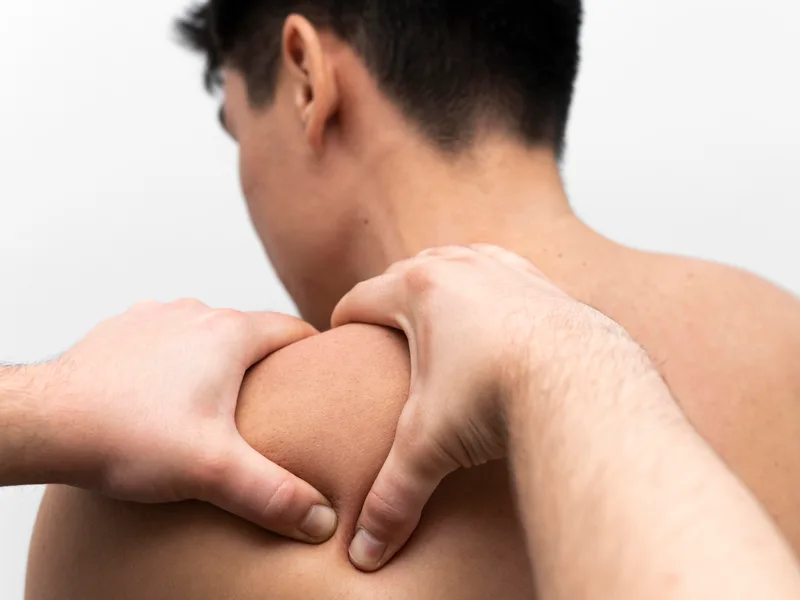
Symptoms of rotator cuff injury
- ✓A deep, dull ache along the outside of the shoulder or upper arm
- ✓Pain that builds when you reach up high or behind your back
- ✓Weakness raising the arm or turning it outward
- ✓A catch, click or pinch near the top of the arm's arc
- ✓Night pain that wakes you, most of all when you lie on that side
- ✓A shoulder that feels stiff and limited after rest
- ✓Fatigue in the shoulder that cuts work or sport short
Common causes
- Overhead lifting or throwing, repeated until the tendon wears
- A sudden injury, such as falling on an outstretched arm or a blow to the shoulder
- Shoulders that round forward and narrow the space under the acromion
- Tendon wear that tends to come with age
- Cuff and shoulder-blade muscles that weaken from lack of use
- A stiff mid back that limits how well the arm can rise
- Poor control of the shoulder blade (scapular dyskinesis) when reaching up
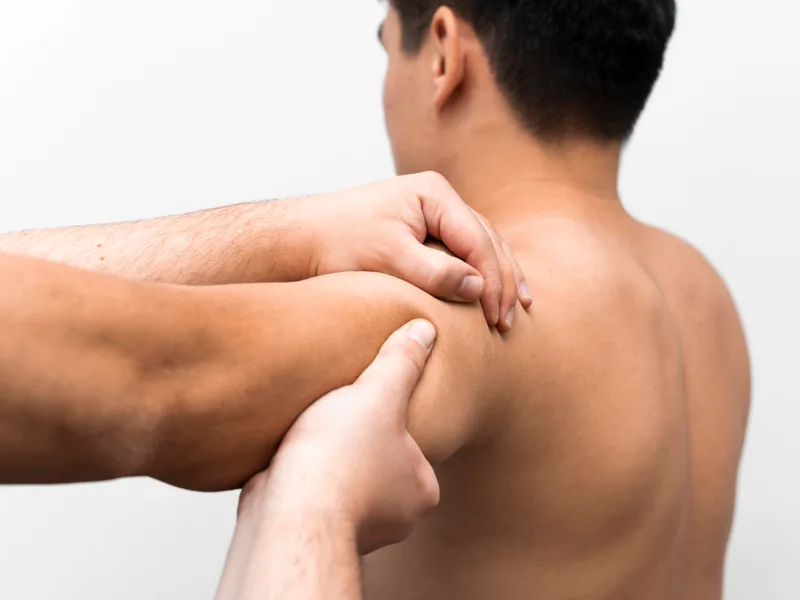
Our approach
How we treat rotator cuff injury in Minneapolis
- Step 1
Detailed exam
Dr. Olson tests shoulder motion, rotator cuff strength, impingement signs and neck and mid-back mobility to find where the pain is really coming from. If imaging such as ultrasound or MRI would change your care, he refers you for it.
- Step 2
A plan that fits your shoulder
By the end of the first visit you'll know what we found and whether conservative care makes sense. If it does, you get a specific rehab plan with a defined end point and clear signs for when to step up to a specialist.
- Step 3
Adjustments, soft tissue and graded rehab
Shoulder and mid-back adjustments, release work for the pecs and lats, and a gradual program for the rotator cuff and shoulder-blade muscles work together to ease pain now and rebuild the strength that supports the joint.
The basics
Understanding rotator cuff injury
Four muscles make up the rotator cuff: the supraspinatus, infraspinatus, teres minor and subscapularis. Their tendons wrap the top of the upper arm bone (the humerus) and keep it centered in the shallow socket of the shoulder blade. Each time you lift, throw or reach up, those tendons slide through a tight gap under a bony ledge called the acromion. If the shoulder is moving poorly because of weakness, slumped posture or repetitive strain, that gap gets even tighter, and the tendons can start to fray, swell or tear. Tendinitis and impingement sit at the early end of this range. Partial-thickness tears are often managed conservatively with careful loading and soft-tissue care. Full-thickness or very large tears may eventually need surgical repair, and Dr. Olson will tell you plainly if your exam points that way.
Many of the rotator cuff problems that come through our south Minneapolis office are at the tendinitis, impingement or partial-tear stage, where conservative care is a reasonable first option. Care typically means adjustments to the shoulder, mid back and neck to help the joint sit and move well, release work on the tight chest and back muscles (pecs and lats) that draw the shoulder forward, and then rehab exercises that load the cuff a little more over time. Getting checked sooner rather than later gives you more options before the tendon wears further.

New Patient Special
Start with a $17 visit — and real answers
- FULL Chiropractic Examination
- Chiropractic Consultation
- Digital X-Rays (if needed)
- Personalized Doctor's Report and Findings
- 1st Adjustment
*Offer excludes Medicare and Medicaid patients
Rotator cuff conditions we treat
The phrase “rotator cuff injury” covers several different problems, and your plan depends on which one you have. At our south Minneapolis clinic, Dr. Olson often sees:
- Rotator cuff tendinitis: one or more cuff tendons, most often the supraspinatus, irritated by overuse. Care usually combines soft-tissue release, smarter load management and gradual strengthening. Our shoulder pain page covers the wider shoulder picture.
- Shoulder impingement syndrome: the tendon and bursa get squeezed under the acromion as the arm rises. Rounded posture and a weak shoulder blade are common drivers, and we work on both.
- Subacromial bursitis: the small cushion (bursa) over the tendon swells and adds to impingement pain. Conservative care and posture work are aimed at settling it without relying on cortisone.
- Partial-thickness rotator cuff tear: the tendon is frayed but still attached. Gradual tendon loading with eccentric and isometric exercises is the usual conservative route, and many partial tears are managed without surgery.
- Cuff weakness from overuse or disuse: the cuff muscles shrink after an injury or a long rest, which leaves the shoulder easier to hurt again. Rehab exercises are the main tool here.
- Rehab after rotator cuff surgery: if you needed an operation, we can help with your return-to-function rehab once your surgeon clears you.
Told you have a full-thickness tear and wondering if surgery can be avoided? A careful exam and a supervised conservative trial can give you a real answer instead of a guess. If conservative care isn’t a good fit, we’ll say so before you put time into it. Overhead athletes with overuse injuries often show early cuff changes that can be addressed before they turn structural, and our rehab exercises page shows the kind of work involved.
When to see a chiropractor for rotator cuff pain in Minneapolis
There’s no need to wait until the shoulder locks up or the arm gives out at work. Book an exam if you notice:
- Pain or weakness when you lift the arm above shoulder height
- An ache that hangs on after activity or wakes you up
- A catching or pinching feeling near the top of the arm’s arc
- Shoulder pain that began after a fall, a collision or a hard, sudden pull
- Pain or tingling running from the shoulder into your arm or hand
- Stiffness that gets worse with rest and doesn’t ease with movement
- Any injury where you felt or heard a pop in the shoulder (get this checked promptly)
Get emergency care if you have severe shoulder pain and can’t move the arm at all after a direct injury, since a large full-thickness tear or a fracture may be involved.
What to expect at your first visit
Your first appointment is unhurried and centered on understanding your shoulder before anything else:
- We hear the story: when it started, which movements bring it on, whether a specific event caused it, and how it’s affecting work, sport or sleep.
- We examine carefully: strength and length testing of the cuff, impingement tests, shoulder and mid-back range of motion, and a neck screen to see whether the neck is involved.
- We explain the findings: in everyday language, including whether conservative care fits, whether imaging should come first, and what a realistic path back looks like.
- We start care if it’s appropriate: many patients begin soft-tissue work and get a first shoulder or mid-back adjustment that same day.
Care is never open-ended. You get a specific plan with a finish line, along with clear criteria for bringing a surgeon into the conversation if that becomes necessary.
Drug-free rotator cuff relief, without medication or surgery
Anti-inflammatory pills and cortisone shots can calm a sore shoulder for a while, but they don’t rebuild the tendon strength or shoulder mechanics you need to use the arm comfortably. Surgery is sometimes needed, and Dr. Olson will tell you when it is. For many cases of tendinitis, impingement and partial tears, though, a conservative plan is worth trying first. That plan relaxes the tight muscles pulling the shoulder forward, improves motion in the shoulder, mid back and neck, and then loads the tendon a little more over time so it can adapt and get stronger. For people in Minneapolis who want to get back to their sport, their job or a full night’s sleep without medication or downtime, rotator cuff injury treatment built this way is a sensible place to begin.
Why Minneapolis-area patients choose Nokomis Chiropractic and Wellness
Patients from Minneapolis, Richfield, Edina, St. Louis Park and Bloomington come to us for shoulder care because we examine carefully, explain clearly and match the plan to the actual stage of the injury. Drawing on more than 36 years in practice, Dr. Jonathan Olson pairs chiropractic adjustments of the shoulder, mid back and neck with hands-on soft-tissue work and a graded rehab and athlete care program. He also recognizes when conservative care has gone as far as it can, and when a surgical consult is the honest next step, he arranges the referral.
Ready to learn what’s behind your shoulder pain? Our New Patient Special keeps the first visit simple, and you can book an appointment online in about a minute.
Why choose chiropractic
How chiropractic rehab compares with the usual rotator cuff route
| Comparison factor | Chiropractic Care | Pain Meds & Surgery |
|---|---|---|
| Works on the underlying cause | ✓Improves mechanics and loads the tendon gradually | ✕Covers up pain or removes tissue |
| Non-invasive and drug-free | ✓Always | ✕Rarely |
| Side-effect risk | ✓Low | ✕Higher (medication, anesthesia, post-op) |
| Tailored to you | ✓Individual loading and mobility plan | ✕Standard protocol for everyone |
| Long-term strength | ✓Graded rehab is part of care | ✕Usually needs a separate PT referral |
| Straight answer on referral | ✓Yes, full-thickness tears are referred out | ✕Surgery first, rehab afterward |
Treatment options
Services we use to relieve rotator cuff injury
Chiropractic Care
Chiropractic care in Minneapolis with Dr. Jonathan Olson. Exam-guided adjustments for back pain, neck pain and headaches at our Lyndale Ave S office.
Learn more →Athlete Care
Athlete care in Minneapolis for strains, sprains and overuse injuries, with chiropractic, soft-tissue work and a staged rehab plan to guide your return to sport.
Learn more →Related conditions
Other conditions we treat in Minneapolis
Patient reviews
What our Minneapolis patients say
“Love the way they operate and accommodate the schedules ❤️❤️❤️”
“Perfect place and professional staff”
“Just the best in the world. Sweet staff! Excellent customer care and treatment. Thanks all!!!❤️❤️❤️”
What causes a rotator cuff injury?+
Usually it builds up from overuse, such as lifting, throwing or reaching overhead again and again until the tendon wears. A single fall or collision can tear the cuff too. Rounded posture, weak shoulder-blade muscles and a stiff mid back can all add to the strain.
Can a chiropractor help a rotator cuff injury?+
Often, yes, for tendinitis, impingement and partial tears. Conservative care focuses on improving how the shoulder moves, relaxing tight muscles around it and gradually loading the cuff through rehab exercises. Full-thickness tears may eventually need surgical repair, and we'll refer you if so.
How do I know if I have a rotator cuff tear or just tendinitis?+
Both hurt, but a tear tends to bring more weakness and a bigger loss of the motion you can produce on your own. If your exam suggests a significant tear, Dr. Olson refers you for ultrasound or MRI to confirm it before settling on a care plan.
How many visits will I need?+
It varies with your injury. Mild tendinitis may settle sooner, while a partial tear with real weakness usually needs a longer stretch of graded loading. After your exam, Dr. Olson gives you a specific plan with a clear end point rather than open-ended care.
Will my insurance cover rotator cuff chiropractic care?+
Most insurance plans include chiropractic coverage for shoulder injuries, and we check your benefits before the first visit so you know what to expect. If a car accident caused the injury, Minnesota no-fault (PIP) usually covers care. Self-pay and HSA/FSA options are also available.
Is chiropractic treatment for the rotator cuff safe?+
We screen for anything that would rule out certain techniques during your exam. Adjustments to the shoulder, mid back and neck are gentle, low-force options are available, and exercises progress in stages so the tendon isn't asked to do more than it's ready for.
What if I need surgery? Do you still refer out?+
Yes. Full-thickness or very large tears, and partial tears that don't improve with a fair trial of conservative care, should be seen by an orthopedic surgeon. We arrange that referral and send clear notes on your care so the surgeon has the whole story.
Can I still exercise with a rotator cuff injury?+
Usually you can keep training your legs and core as long as the shoulder stays unloaded. We'll tell you what to change or skip while it heals, and your rehab exercises are planned to load the cuff safely during recovery rather than avoid it entirely.
Do you treat rotator cuff injuries from sports?+
Yes. We often see cuff injuries in overhead athletes such as swimmers, pitchers, volleyball players and CrossFit athletes, plus workers who reach overhead all day. [Athlete care and sports rehab](/services/athlete-care/) is central to what we do, and each athlete's plan includes return-to-sport goals.
Does rotator cuff injury cause neck pain too?+
The link can run both ways. A stiff lower neck can change how the shoulder blade moves and put more load on the cuff. On the other hand, guarding a sore shoulder for months often tightens the upper trapezius muscles and feeds into neck pain.